12 Aug
Full Mouth Dental Implants: Planning a Stable New Smile
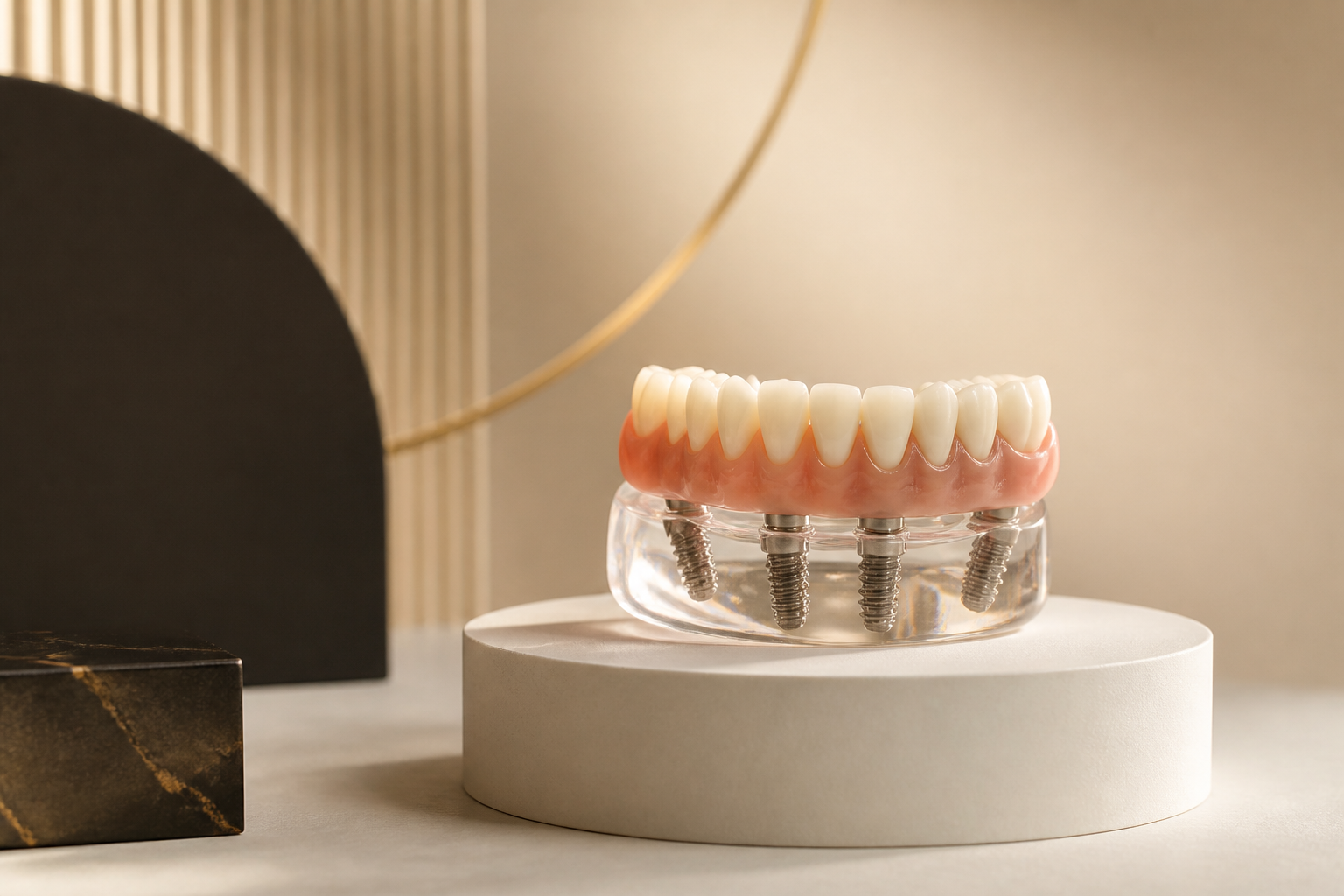
People who have lost most or all teeth may struggle with loose dentures, limited food choices and reduced confidence. Full mouth implant treatment uses several implants to support a fixed or removable full-arch restoration, providing greater stability than a conventional denture. It is comprehensive rehabilitation, so success begins with health, expectations, bone condition and bite rather than choosing from photographs alone.
Digital scans and three-dimensional imaging help evaluate anatomy and plan implant positions supporting the final teeth. Implant number and distribution, grafting needs and provisional teeth vary between patients. A staged plan explains surgery, healing, temporary restorations and final bridge construction, including realistic timelines and the circumstances that could change them.
Implant-supported teeth still require daily care even though they cannot develop ordinary decay. Plaque can inflame tissues around implants, so patients learn to use suitable brushes, floss or water-cleaning aids beneath the bridge. Professional maintenance, a balanced bite and control of risks such as smoking are central to keeping a full-mouth restoration healthy and dependable.