12 Aug
Dental Bridges: Options, Care and Long-Term Success
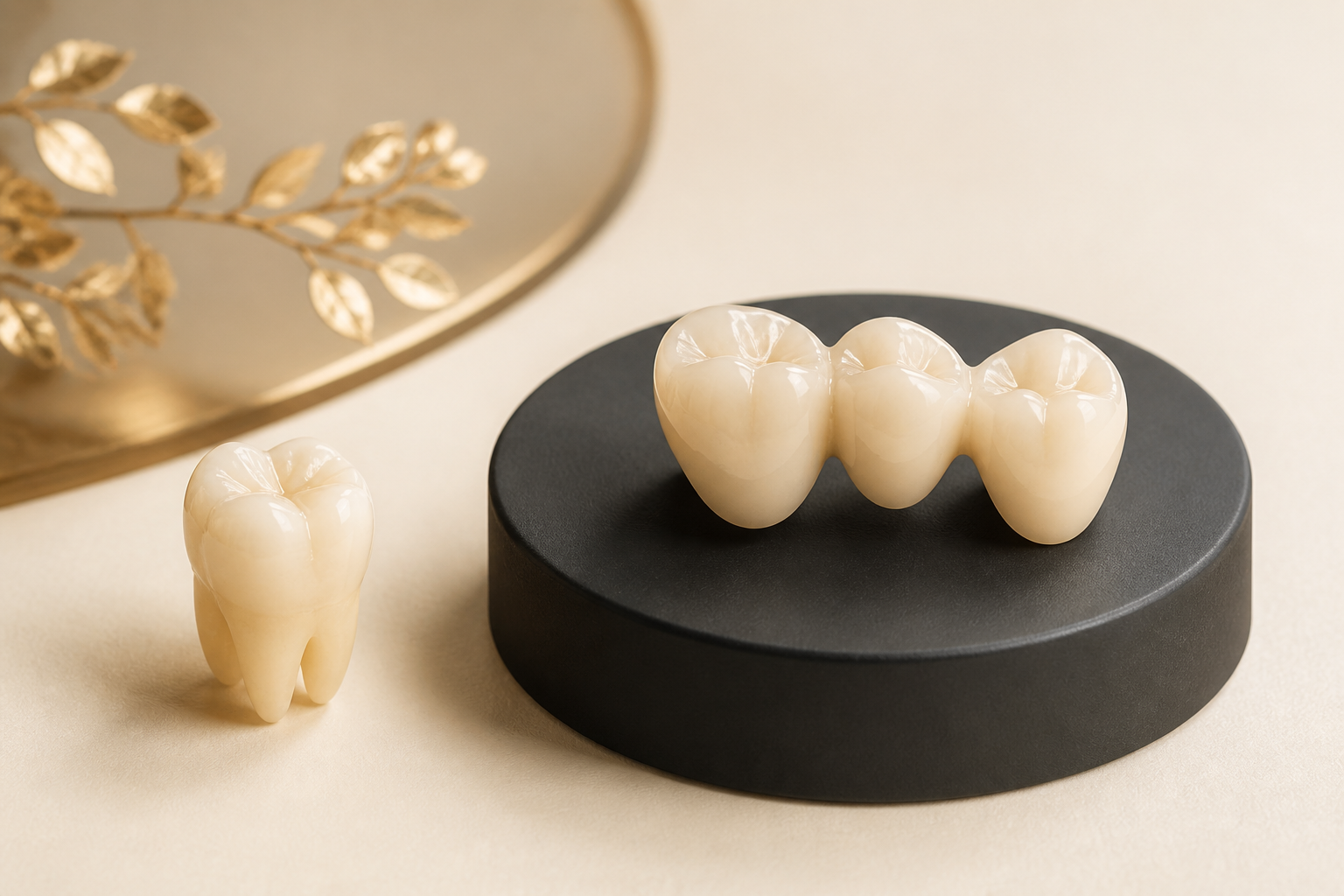
A missing tooth affects more than appearance because nearby teeth may tilt, the opposing tooth may move and chewing can become uneven. A bridge closes the gap with a fixed replacement connected to supporting teeth or implants. Conventional, cantilever, resin-bonded and implant-supported designs suit different situations, so neighbouring teeth and bite must be assessed before selection.
For a conventional bridge, supporting teeth are shaped for crowns and an impression or digital scan records the area. A laboratory creates appropriate contacts, contours and shade while a temporary bridge protects the teeth. At fitting, the dentist checks accuracy, cleansability, appearance and bite before securely bonding the final bridge.
A bridge needs cleaning around and underneath it because ordinary floss cannot pass between joined units. Floss threaders, interdental brushes or recommended aids remove plaque from hidden surfaces and protect supporting teeth. Avoid cracking hard foods with the bridge, attend routine checks and report looseness or bite changes early so small concerns can be managed promptly.